
LS-Tag™ Life Science ID Tags
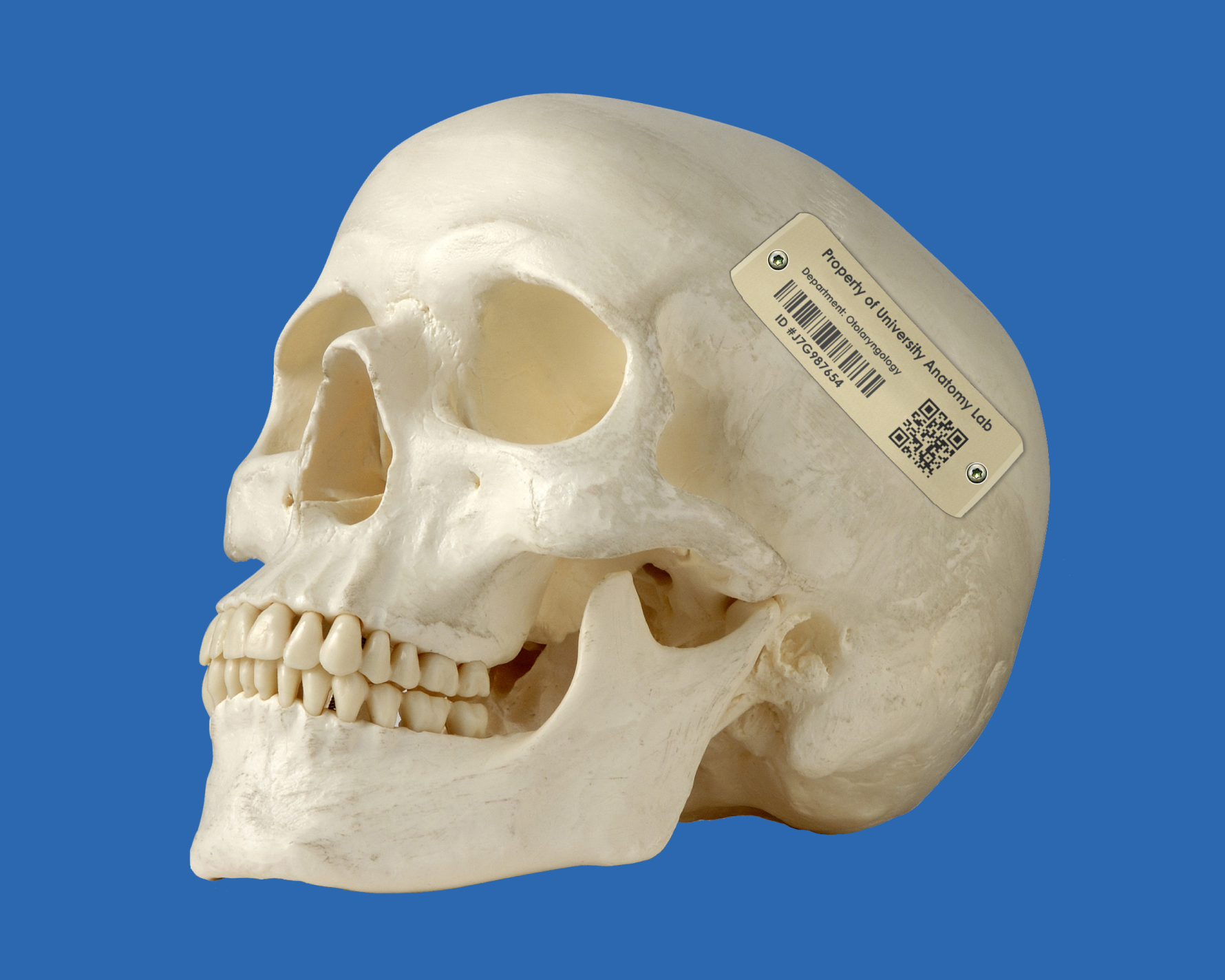
LS-Tag™ Life Science ID Tag
Anatomical Specimen Tags for Life Sciences, Education, and Preservation Processes
LS-Tag™ is built to identify biological specimens through preservation, dissection, inspection, treatment, transportation, and educational investigation.
- Provides identification and security during anatomical specimen preservation
- Built for biological specimens through preservation processes
- Resistant to extreme temperatures from -52°F to 1600°F / -47°C to 870°C
- Resistant to chemicals, abrasion, and UV exposure
- Survives long-term exposure to formalin and glutaraldehyde
- Survives long-term exposure to chemicals and organic cleansers
- Supports 1D and 2D barcodes plus human-readable text
- Stainless steel with high-contrast laser-markable coatings
- LS-Tag™ helps protect traceability when specimen identification cannot fail.
Durable Identification for Anatomical Specimens
Anatomical specimen identification requires more than a basic label. Specimens may move through preservation, dissection, inspection, treatment, transportation, study, storage, and return processes. If identification fails at any point, the consequences can be serious.
LS-Tag™ is designed for life sciences and education applications, providing identification for biological specimens through preservation processes. InfoSight describes LS-Tag™ as resistant to extreme temperatures, chemicals, abrasion, and UV exposure, with long-term survival in formalin, glutaraldehyde, chemicals, and organic cleansers.
Connect with an identification expert
Built for Preservation Chemicals and Long-Term Readability
Specimen preservation often involves chemicals that can destroy standard labels or make them unreadable over time. Formalin, glutaraldehyde, organic cleansers, disinfectants, germicides, and preservatives are common in medical, scientific, and educational environments.
LS-Tag™ is built for these conditions. InfoSight’s life science page notes that its tags are abrasion resistant and impervious to most chemicals used in cleaning, inspection, and preservation of anatomical specimens. This helps keep identification intact through the processes that matter most.
Why Traceability Matters in Life Science Applications
In life science and education settings, traceability is about more than workflow efficiency. It helps maintain security, organization, chain of custody, study accuracy, and respect for the specimen and donor process.
As specimens are dissected, inspected, treated, and transported, identification must remain readable and connected to the correct records. InfoSight notes that its life science tags remain intact and readable as specimens move through these stages, and can help researchers locate specimens after studies are completed.
Solve Faded Labels, Chemical Damage, and Identification Risk
If labels fade, detach, or break down during preservation, teams may be forced into manual verification, duplicate record checks, or extra handling. In a lab, training center, or research facility, that creates avoidable risk and slows down work.
LS-Tag™ helps solve these issues with stainless steel construction and high-contrast laser-markable coatings. It supports 1D and 2D barcodes, plus human-readable text, helping teams connect each specimen to the correct record and maintain reliable identification through preservation and educational investigation.
The Right Tag for Anatomical Labs and Training Centers
LS-Tag™ is a strong fit for anatomical laboratories, training centers, academic institutions, universities, and research facilities. It is designed for biological specimen identification through preservation processes and educational investigation.
For teams searching for anatomical specimen tags, life science ID tags, laboratory tags, biological specimen labels, formalin-resistant tags, glutaraldehyde-resistant tags, stainless steel specimen tags, or barcode tags for anatomical identification, LS-Tag™ provides a durable solution for high-stakes identification.
Connect with an identification expert
Q&A: LS-Tag™
What is LS-Tag™?
LS-Tag™ is a durable life science ID tag designed to identify biological and anatomical specimens through preservation processes and educational investigation.
What problem does LS-Tag™ help solve?
LS-Tag™ helps reduce identification risk caused by faded, damaged, unreadable, or chemically compromised specimen labels.
What applications is LS-Tag™ designed for?
LS-Tag™ is designed for life sciences, education, anatomical laboratories, training centers, and biological specimen identification through preservation processes.
Can LS-Tag™ survive formalin and glutaraldehyde?
Yes. LS-Tag™ is designed to survive long-term exposure to formalin and glutaraldehyde, as well as other chemicals and organic cleansers.
What temperature range can LS-Tag™ withstand?
LS-Tag™ is resistant to extreme temperatures from -52°F to 1600°F / -47°C to 870°C.
Can LS-Tag™ support barcodes?
Yes. LS-Tag™ can support 1D and 2D barcodes, plus human-readable text, to help connect specimens to the correct records.
What is LS-Tag™ made from?
LS-Tag™ is made from stainless steel with high-contrast laser-markable coatings.
How can LS-Tag™ help improve productivity?
LS-Tag™ helps reduce manual verification, relabeling, and identification uncertainty by keeping specimen identification readable through preservation, study, and handling.
Who should use LS-Tag™?
LS-Tag™ is a good fit for anatomical laboratories, training centers, academic institutions, universities, research facilities, and life science teams that need durable specimen identification.
How do I know if LS-Tag™ is the right tag for my process?
The best fit depends on your preservation chemicals, storage conditions, attachment method, specimen handling process, and where current labels are failing. InfoSight can help review your application and recommend the right tag.